Pitching an Assessment is not just about presenting a product – it's about telling a strong, clear and convincing story that helps the customer understand the value of broad involvement. A good pitch doesn't come by itself. It requires preparation, the right words, the right visuals and a story that sits in your backbone. When you master it, it becomes much easier for the customer to say "yes please" – because they can see exactly what an Assessment can do for them.
The story is crucial
When you pitch a GAP Assessment, it's the story that carries the conversation. It's what helps the customer understand how an Assessment creates clarity in complex situations, and why involvement leads to better decisions than traditional processes. A strong story makes it easy for the customer to see the connection between their challenges and the value the Assessment can create.
The story cannot be improvised. It must be simple, consistent and easy to understand – and you must stick to it. The less you deviate, the stronger and more professional you appear.
Never use words like "survey" or "questionnaire"
One of the most common mistakes in a pitch is using the wrong words. Many customers associate "survey" and "questionnaire" with administrative, heavy processes without real value. It leads thoughts toward well-being surveys or HR measurements – far from what an Assessment is.
The word Assessment signals something professional and targeted. It tells the customer that they get decision-relevant insight, not just data. Therefore, you should always use the word Assessment – it elevates the conversation, increases professionalism and makes it easier to get the customer on board.
Watch out for the classic pitfalls
Although the pitch seems straightforward, there are several pitfalls. The most common is taking it too lightly and thinking "it'll be fine". A pitch only becomes strong when it's delivered naturally and without hesitation – and that requires practice. The more you train the story, the more confident you appear, and the easier the customer believes your message.
Another pitfall is becoming too technical. When focus shifts from value to features, you often lose the customer. INVOLV3 is about insights, alignment and better decisions – not about technology.
Additionally, deviating from the story can create problems. The more you improvise, the greater the risk of misunderstandings. A pitch is strong when it's simple, sharp and recognizable.
Use strong visual support materials
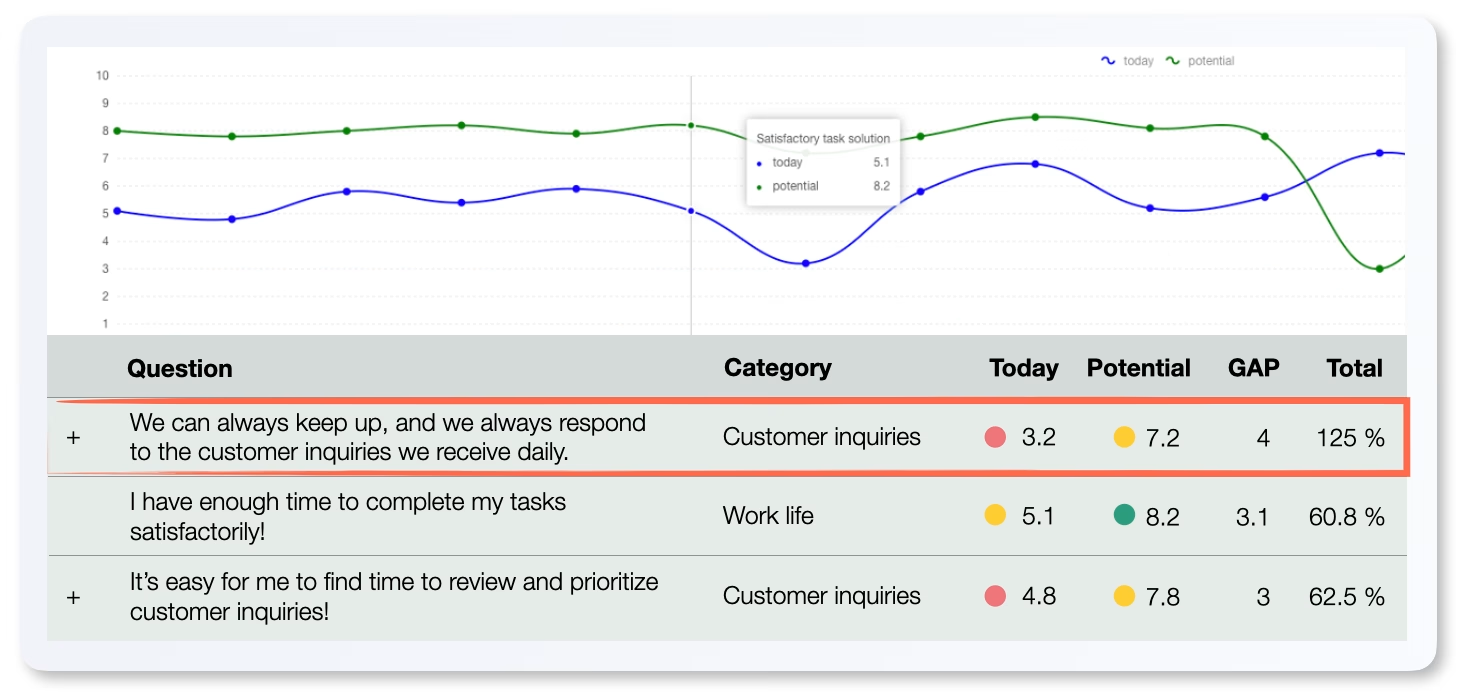
Visual elements are not decoration; they are an important tool in an effective pitch. A good visual expression makes it easier for the customer to understand the connection between involvement, data and decision-making. It creates calm, structure and professionalism. At the same time, visuals help you as the sender, because they support the story and make it easier to stay on track.
Download Pitch examples